

There has been a lot of progress by scientists looking into the composition of Martian soil and atmosphere in understanding it’s elements quantitatively and operationally. Agriculture is a rather complex chemical subject and comparing Eareth conditions to those of mars are requisitie before people think about living there. Too much chlorine in the atmosphere for instance, or adding amonia through various attempts at growing plants and stimulating non-Earth like chemical reactions with Martian elements could create some toxic or explosive results I would guess.
Scientist have discovered nitrogen in Martian soil though, and that is one necessary item for plant growth. I learned that NO3 can have deleterious affects on plants and further that it has been discovered that some chloirdes can mitigate that affect beneficially for plants.
Planet covering dust storm can occur for a couple of months every five years more or less and lesser storms can occur more often causing problems for solar power collection. The Martian atmosphere that is about 100 times thinner than Earth’s still has wind that could power wind generators-especially I would think, if there is a lot of dust in the wind, to generate electricity.
Photos of stratified rock- sandstone like sedimentary rock formed from water born deposition and remaining ice on Mars make one think that in, dark spaces in the walls of the 4-mile deep Valles Marinerus canyon probably formed by early history formative techtonic rift and eroded with flowing water lava caves may exist that have pools of ice forever in shadow or darkness out of sunlight waiting to be used for Martian gardening within constructed sealed spaces lit with fiber-optic conveyed photons.
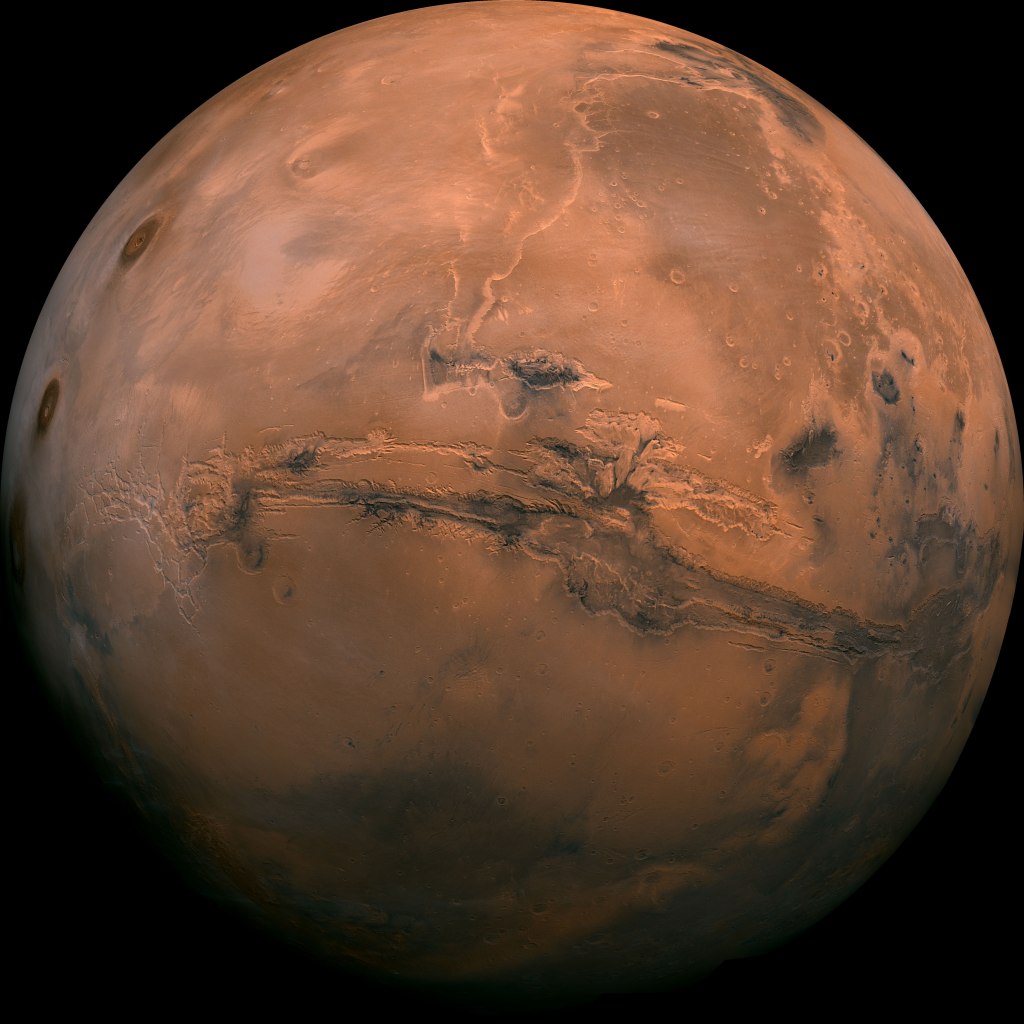
image credit N.A.S.A.
Mar’s Valles Marineris
 Garrison Gibson: books and blog