
Conservation of the Arctic is a challenging prospect. The far north experiences the worst effects of global warming. The farther north one goes the warmer it generally gets with greenhouse gassing. After the Cold War 1.0 ended Nordic countries signed off with Russia on coordinated efforts to conserve the environment of the Arctic (e.g. the Kirkenes Declaration on January 11th, 1993). With the hot war in Ukraine following roughly decade of western sanctions teamwork between the EU, Nordic nations and Russia to conserve the north ecosphere together have broken down. Intransigent hostility from the U.S. Democrat Party toward Russia since the Obama administration put effort into reversing the peaceful end of the Cold War sewing enmity and distrust bilaterally.
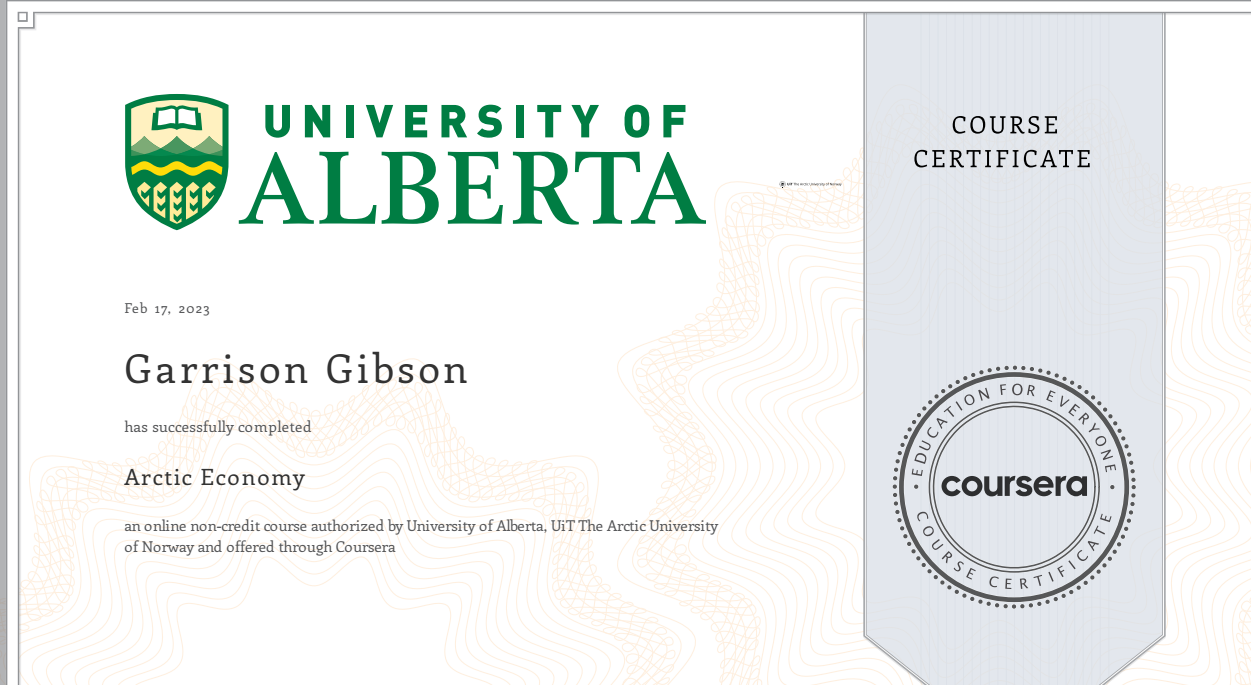
When I completed a short course on Arctic Economics recently on-line I learned several salient facts about the Arctic region demographically and environmentally that reinforced prior learning. The protracted Ukrainian war and nearly inevitable years of EU-American hostility toward Russia in the aftermath will make efforts to demilitarize the Arctic and even restore the ecosphere toward a Serengeti plain like state of wild health with animals at their maximum sustainable numbers won’t be possible. Even without sanctions and war human mass social behavior probably meant that exploitation and despoliation of the Arctic would proceed.
It is quite likely that a rapid militarization of the Arctic will develop as new military bases and resource extraction proceed virtually with the urgency of a war footing. China had already invested substantial funds in developing the Russian Arctic port and LNG capacity from the N.E. passage and that is likely to continue of not acellerate. It is not impossible that the U.S.A. will develop more resources for the North as well since Russia and China teaming up in the long run, armed with nuclear powered icebreakers and numerous ice-hardened conventional ships will create more Russia-Asia trade.
 Garrison Gibson: books and blog