
Gary- When did the NFL start?
AI- The National Football League (NFL) was founded on September 17, 1920, in Canton, Ohio. [1]
It originally began under a different name, the American Professional Football Association (APFA), before officially renaming itself the National Football League for the 1922 season. The league was formed during a meeting of team representatives inside Ralph Hay’s Hupmobile auto dealership, and legendary multi-sport athlete Jim Thorpe was chosen as its very first president. [1, 2, 3, 4]
Of the original charter members that kicked off play in 1920, only two franchises survive today: [1]
- The Decatur Staleys, who relocated and became the Chicago Bears.
- The Racine Cardinals, who went through several relocations and are now the Arizona Cardinals. [1, 2]
Would you like to know more about how the original 1920 franchises were chosen, or are you interested in the 1970 AFL-NFL merger that shaped the modern league layout?
Gary– What happened before 1920; did people play American football?
AI– Yes, people played American football for decades before the NFL was founded in 1920.
The sport evolved throughout the late 19th and early 20th centuries, transforming from a chaotic, violent college campus game into a highly organized professional sport.
1. The College Roots (1869–1880s)
American football grew out of English rugby and soccer. The very first college football game was played on November 6, 1869, between Rutgers and Princeton. However, that early game looked more like soccer, where players could only kick the ball and teams had 25 players on the field.
2. The “Father of American Football”
In the 1870s and 1880s, a Yale player and coach named Walter Camp completely revolutionized the sport. He is responsible for creating the rules that separated American football from rugby:
- He established the line of scrimmage.
- He introduced the system of downs (originally needing 5 yards in 3 downs to keep the ball).
- He reduced the number of players on the field to 11 per side.
3. The Crisis of Violence (1905)
Early football was incredibly dangerous. Players didn’t wear helmets, and popular tactics like the “flying wedge”—where players formed a massive V-shape and rammed into defenders at full speed—led to catastrophic injuries.
In 1905, 18 college players were killed and over 150 were severely injured on the field. The violence was so severe that several universities banned the sport, and President Theodore Roosevelt stepped in. He warned college football leaders to clean up the game or face an outright ban.
This crisis led to two massive changes in 1906:
- The forward pass was legalized to spread out the players and reduce head-on collisions.
- A governing body was formed, which later became the NCAA.
4. The Birth of Pro Football (1892)
While colleges dominated the sport’s popularity, professional football began quietly in Pennsylvania.
- The First Pro Player: On November 12, 1892, former Yale star William “Pudge” Heffelfinger was paid $500 by the Allegheny Athletic Association to play in a game, making him the first documented professional football player.
- The First Pro League: In 1902, the Ohio League formed. It was a loose coalition of independent teams across Ohio (like the Canton Bulldogs and Massillon Tigers) that paid players openly. The fierce competition and bidding wars in this local league directly led to the meeting in 1920 where the NFL was born to bring order and salary caps to the sport.
If you want to explore further, let me know:
- Want to know more about President Roosevelt’s intervention and how the forward pass changed the game?
- Interested in Jim Thorpe’s pre-NFL career as an Olympic legend and early football star?
Gary– About Jim Thorpe football star era
AI– Jim Thorpe’s football star era spanned from 1907 to 1928, a period where he transitioned from a legendary collegiate force into the ultimate pioneer of professional football. [1]
A member of the Sac and Fox Nation (named Wa-Tho-Huk, meaning “Bright Path”), Thorpe used his generational speed, bruising power, and elite kicking ability to single-handedly legitimize football as a major American spectator sport. [1, 2]
1. The College Era: Carlisle Indians (1907–1912)
Thorpe played college football at the Carlisle Indian Industrial School under legendary coach Glenn “Pop” Warner. Warner initially tried to prevent his track star from playing the violent sport, but Thorpe convinced him by easily running through the entire varsity defensive unit on his first try out. [1, 2]
- The Breakthrough (1911): Thorpe gained national fame when he scored all 18 points—including four field goals—to upset top-ranked Harvard, 18–15. [1]
- Dominating the Nation (1912): Fresh off winning two gold medals at the 1912 Stockholm Olympics, Thorpe put together one of the greatest college seasons ever. He rushed for 1,869 yards and scored 25 touchdowns. During a blowout win against Army, a young defender named (and future U.S. President) Dwight D. Eisenhower was injured trying to tackle Thorpe. He was named a consensus First-Team All-American in both 1911 and 1912. [1, 2]
2. The Pre-NFL Pro Era: Canton Bulldogs (1915–1919)
After a brief stint in Minor and Major League Baseball, Thorpe signed with the Canton Bulldogs of the loose Ohio League in 1915. [1, 2]
- The $250 Superstar: The Bulldogs paid Thorpe $250 a game (roughly equivalent to over $8,000 today), an unprecedented sum for football players at the time. [1]
- Instant Dynamic Draw: Before his arrival, Canton games averaged about 1,000 spectators. For Thorpe’s debut against the arch-rival Massillon Tigers, over 8,000 fans packed into the stadium. [1, 2]
- Championship Dynasty: Serving as both star player and coach, Thorpe led the Bulldogs to unofficial “World Championships” in 1916, 1917, and 1919. To cap off the 1919 title game, Thorpe famously unleashed a wind-assisted 95-yard punt from his own 5-yard line to secure the victory. [1, 2]
3. The NFL Era (1920–1928)
When the American Professional Football Association (which became the NFL) was organized inside a Canton car dealership in 1920, the charter owners elected Thorpe as the league’s very first President. They believed his unmatched star power would give the new league instant credibility. [1, 2]
Thorpe relinquished the presidency after one year to focus entirely on playing. He went on to play 52 official games for six different franchises over the next decade: [1, 2, 3]
| Franchise [1, 2, 3, 4, 5] | Years Active | Notes |
 Canton Bulldogs | 1920, 1926 | Served as player-coach during the inaugural NFL season. |
| Cleveland Indians | 1921 | Played and served as head coach. |
| Oorang Indians | 1922–1923 | Formed and traveled with an all-Native American team based out of La Rue, Ohio. Earned official All-NFL honors in 1923. |
| Rock Island Independents | 1924–1925 | Continued as a massive ticket-selling draw in Illinois. |
| New York Giants | 1925 | Briefly joined the newly formed New York franchise to boost East Coast interest. |
| Chicago Cardinals | 1928 | Played his final token game on Thanksgiving Day 1928, retiring at age 41. |
Thorpe’s legacy was so profound that in 1950, the Associated Press voted him the Greatest Football Player of the Half-Century. He was later elected as a charter member of both the College Football Hall of Fame (1951) and the Pro Football Hall of Fame (1963). [1, 2]
Would you like to explore the Oorang Indians traveling team and the halftime shows they performed, or read more about how the NFL honors his legacy today?
Gary– Oorang Indians
AI– The Oorang Indians were one of the most unique, bizarre, and short-lived franchises in NFL history, playing in the league for just two seasons from 1922 to 1923.
Based out of La Rue, Ohio—the smallest town ever to host an NFL team—the franchise was created less as a serious football competitor and more as a traveling Wild West show to market hunting dogs.
1. The Ultimate Marketing Scheme
The team was founded by Walter Lingo, an eccentric millionaire who owned the Oorang Kennels in La Rue, which bred world-famous Airedale Terriers. Lingo realized that if he created a professional football team, he could use the games to advertise his dogs to thousands of wealthy spectators across the country.
To maximize the ticket-selling draw, Lingo recruited his close friend Jim Thorpe to manage, coach, and play for the team. Lingo had one strict condition for the roster: every single player on the team had to be Native American.
2. The Native Roster
Thorpe used his deep connections from the Carlisle Indian Industrial School to recruit elite Native athletes representing various tribes, including the Cherokee, Mohawk, Chippewa, and Sac and Fox.
Because the players were required to work at Lingo’s kennels when they weren’t playing football, the roster was given a unique set of nicknames to fit the “Wild West” theme. Players went by names like:
- Joe “Little Twig” Guyon (a future Pro Football Hall of Famer)
- Leon “Sanooke” Williams
- Baptiste “Long Time Sleep” Thunder
- Ted “Wrinkle Meat” Littleturtle
3. The Bizarre Halftime Shows
Because Lingo’s primary goal was entertainment and advertisement, the Oorang Indians were famous for putting on elaborate pre-game and halftime spectacles rather than focusing on football strategy.
Instead of resting in the locker room at halftime, Thorpe and his players would re-emerge onto the field to perform for the crowd:
- Dog Exhibitions: Players would showcase Lingo’s Airedale Terriers performing tricks, tracking scents, and fighting simulated bears.
- Cultural Displays: The players performed traditional dances, participated in knife-throwing and tomahawk exhibitions, and gave lasso demonstrations.
- Athletic Feats: Jim Thorpe would regularly captivate audiences by drop-kicking field goals from the 50-yard line while facing backwards.
4. Life on the Road
The Oorang Indians were a pure traveling team. Because La Rue was a tiny village with a population of less than 1,000 people, they had no home stadium. Every single one of their 20 official NFL games over two years was played on the road.
The travel schedule was grueling, and the players were known for partying intensely on the road. On one legendary occasion in Chicago, the players reportedly wanted to stay out past curfew but found themselves locked out of their hotel rooms. To fix the problem, they lifted a streetcar off its tracks to block traffic until the hotel staff let them inside.
5. On-Field Record and Collapse
While the team possessed incredible individual athletes like Thorpe and Guyon, their lack of practice and focus on halftime entertainment translated into a poor on-field product. They finished their two NFL seasons with a combined official record of 4 wins and 16 losses.
| Season | Wins | Losses | Ties | Finish |
| 1922 | 3 | 6 | 0 | 11th of 18 |
| 1923 | 1 | 10 | 0 | 18th of 20 |
By the end of the 1923 season, the novelty had worn off, Jim Thorpe’s aging body could no longer handle the full-time physical toll, and Lingo had achieved all the advertising exposure his kennels needed. Lingo folded the team in December 1923, and the Oorang Indians vanished into NFL lore as one of the league’s most colorful experiments.
If you want to keep exploring this era, let me know:
- Want to know more about Joe “Little Twig” Guyon, the team’s other Hall of Famer?
- Interested in what happened to the town of La Rue after the NFL left?
• Want to know more about Joe “Little Twig” Guyon, the team’s other Hall of Famer? • Interested in what happened to the town of La Rue after the NFL left?
Gary– About Gunyon.
AI– Joe “Little Twig” Guyon: The Multifaceted Legend
Joe Guyon (born O-Gaa-Baa-We-Gi-Zhig, meaning “Earth Standing in the Sky”) was a member of the White Earth Band of Chippewa and is one of the most versatile athletes ever enshrined in the Pro Football Hall of Fame.
- The Path with Thorpe: Guyon’s football journey closely mirrored Jim Thorpe’s. He played under Pop Warner at the Carlisle Indian Industrial School alongside Thorpe, and later transferred to Georgia Tech, where he led John Heisman’s famous 1917 team to a national championship.
- The Oorang Era: When Walter Lingo formed the Oorang Indians in 1922, Guyon was recruited as the team’s starting halfback and passing threat opposite Thorpe. While Thorpe was the aging icon drawing the crowds, the younger Guyon was the true on-field workhorse, executing blistering runs and punishing tackles.
- The Ultimate Revenge: After the Oorang Indians folded, Guyon went on to play for the Rock Island Independents, Kansas City Cowboys, and the New York Giants. In 1927, he led the Giants to an NFL Championship—a sweet victory, given that he replaced a benched Benny Friedman (who was Jewish) on a team owned by Tim Mara, at a time when ethnic minorities faced immense prejudice.
- The Hall of Fame: Guyon was inducted into the Pro Football Hall of Fame in 1966. Remarkably, he was also a professional baseball player, playing several seasons in the minor leagues and coaching college baseball at Clemson.
What Happened to La Rue, Ohio?
After the Oorang Indians folded in December 1923, the tiny village of La Rue quietly went back to being a rural farming community, but it permanently cemented its place in American sports history.
- The Smallest NFL Town Ever: With a population that hovered around 800 people in the 1920s (and sits at roughly 650 today), La Rue remains the absolute smallest town to ever host an NFL franchise. Green Bay, Wisconsin, is often called a “small market,” but Green Bay had over 30,000 residents when the Packers joined.
- The Decline of Oorang Kennels: Walter Lingo’s Airedale Terrier empire eventually faded. The advent of the Great Depression in the 1930s severely hit the luxury dog market, and the kennels downsized significantly before closing entirely after Lingo’s death in 1969.
- The Legacy Today: If you visit La Rue today, the physical remnants of the team are gone—the old kennels have been demolished, and the fields where the team practiced are now farmland. However, the town fiercely guards its football heritage. A state historical marker stands downtown to commemorate the Oorang Indians, and local high school and historical societies still celebrate the brief two years when two of the greatest athletes on Earth worked at a dog kennel and played in the NFL on the road.
We’ve traveled from the 1940s Buffalo Bills all the way back to the 1920s roots of the league. If you’d like to shift gears, let me know:
- Do you want to jump back to how the modern Buffalo Bills franchise came to be in 1959?
- Would you like to look at other defunct, colorful early NFL teams like the Dayton Triangles or the Pottsville Maroons?
Gary– Are there any any Indians in the NFL today
AI-Yes, there are active Native American (American Indian) players in the NFL today, representing various tribal nations across the league. [1]
The most notable active players with Native American heritage include:

Creed Humphrey (Center, Kansas City Chiefs): A premier offensive lineman in the NFL, Humphrey is a citizen of the Potawatomi Nation.

Keenan Allen (Wide Receiver, Chicago Bears / formerly Chargers): One of the league’s most consistent wide receivers over the last decade, Allen is of Lumbee descent.

Malcolm Rodriguez (Linebacker, Detroit Lions): Emerging as a defensive standout and fan favorite, Rodriguez is of Cherokee heritage.

Austin Corbett (Offensive Lineman, Carolina Panthers): A veteran guard and Super Bowl champion, Corbett has Paiute heritage.

James Winchester (Long Snapper, Kansas City Chiefs): A highly reliable special teams staple who has won multiple Super Bowls with the Chiefs, Winchester is a member of the Choctaw Nation. [1, 2]
Making Recent History
The league also saw a historic milestone when offensive tackle Shiyazh Pete signed with the Dallas Cowboys, becoming the first member of the Navajo Nation to play in an NFL game. Though he played during the preseason and is a free agent, his debut drew thousands of Navajo fans who traveled to watch him play, carrying tribal flags and celebrating a major step forward for modern representation. [1, 2, 3]
(Note: If you meant players of East Asian/Indian heritage, the most notable figure is retired linebacker Brandon Chillar, who is of Indian-American descent and won a Super Bowl with the Green Bay Packers).
Would you like to know more about Creed Humphrey’s accomplishments with the Chiefs, or look closer at how Shiyazh Pete’s debut inspired Native communities?
Gary– Why do the Kansas City Cowboys flip their name to the Kansas City Chiefs?
AI- The Kansas City Chiefs did not actually evolve from or change their name from the Kansas City Cowboys. Instead, those were two completely separate franchises from different eras of football history: [1, 2, 3]
- The Kansas City Cowboys were a very early, short-lived NFL team that played from 1925 to 1926. They were a traveling team known for wearing cowboy attire to games, but the franchise completely folded and faded away in the late 1920s. [1, 2]
- The Kansas City Chiefs are a modern franchise that was originally founded in 1960 as the Dallas Texans in the rival American Football League (AFL). [1]
How the “Chiefs” Got Their Name
In 1963, team owner Lamar Hunt decided to move the Dallas Texans out of Texas because they were competing for fan attention with the NFL’s newly formed Dallas Cowboys. [1, 2]
When looking for a new city, Hunt was heavily recruited by the eccentric mayor of Kansas City, Missouri, H. Roe Bartle. Mayor Bartle went to extreme lengths to win over the team, promising to triple the franchise’s ticket sales and expand the local stadium. [1, 2]
Once the move was finalized, Hunt initially wanted to keep the name and call them the “Kansas City Texans”. However, team executives convinced him that a team named the Texans would never sell in Missouri. [1, 2]
The team held a public fan contest to choose a new moniker. While names like the “Mules” and “Royals” were highly requested, “Chiefs” was chosen as a direct tribute to Mayor Bartle, whose lifelong personal nickname was “The Chief”. Bartle had earned the nickname decades prior as a prominent leader and executive within the local Boy Scouts organization. [1, 2, 3, 4]
So, while the name sounds like it has Native American roots—and the team heavily adopted indigenous imagery during its early decades—the name itself was actually a marketing nod to a local mayor who successfully brought football back to Kansas City.
Gary– About Mayor Bartle’s promises
AI– The courtship of Lamar Hunt by Kansas City Mayor H. Roe Bartle is one of the most famous—and intensely secretive—relocation stories in sports history. Bartle famously bragged that he went to Hunt “on bended knee and begged him” to bring the Dallas Texans north.
To pull off the move without alerting the media or the city of Dallas, Bartle used a mix of heavy-handed promises, municipal resources, and absolute spy-movie secrecy:
- The Cloak-and-Dagger Secrecy: Bartle discovered Hunt was looking to relocate during a business trip. To keep negotiations entirely hidden from reporters, Bartle refused to send mail from Kansas City Hall. Instead, he routed all correspondence to Hunt through a completely different location. When Hunt and his general manager, Jack Steadman, secretly flew up to inspect Kansas City, Bartle took them around town under aliases, introducing Hunt to local officials as “Mr. Lamar” and Steadman as “Jack X”.
- The 25,000 Season Ticket Guarantee: Bartle confidently promised Hunt that Kansas City would immediately buy 25,000 season tickets to support the franchise. Hunt actually made the relocation contingent on this exact number. However, the city didn’t quite hit the target, dragging in roughly 15,000 tickets during an intense 90-day campaign spearheaded by local businessmen. Because the ticket drive had still massively outperformed 13 other existing professional football clubs at the time, Hunt was thoroughly convinced anyway and approved the move.
- Free Luxury Upgrades: Bartle promised that the city would massively expand Municipal Stadium, fund extensive renovations, and even erect a brand-new office building specifically to serve as the franchise’s team headquarters.
- Tripling the Fan Base: Knowing that Hunt was losing money in Dallas while splitting a market head-to-head with the NFL’s Dallas Cowboys, Bartle explicitly promised that Kansas City would triple the team’s existing fan base and guarantee a market entirely free of direct NFL competition.
Bartle’s relentless salesmanship completely won Hunt over. As a direct thank you for the sheer effort—and the crazy promises—the team executives bypassed public contest suggestions like the “Mules” to name the franchise the Chiefs strictly in honor of Bartle’s lifelong nickname.
Gary– How long did Jim Thorpe live what happened to him after he retired from playing with the Indians
AI- Jim Thorpe lived to be 64 years old. He passed away on March 28, 1953, after suffering a heart attack in his trailer home in Lomita, California. [1, 2, 3]
The decades following his retirement from professional sports were filled with deep financial hardship, personal tragedy, and a tireless fight for Native American representation. [1, 2]
1. Moving to Hollywood and Acting (1930s)
After retiring from professional sports at age 41—right at the onset of the Great Depression—Thorpe relocated to Los Angeles to try his hand at acting. [1, 2]
- The Extra Roles: He accumulated dozens of film credits, but because Hollywood rarely gave complex roles to minorities at the time, he was primarily cast in uncredited, highly stereotyped background roles as an “Indian chief” or extra in Westerns. [1, 2]
- Advocating for Native Actors: Disgusted by the practice of Hollywood studios hiring white actors in reddish makeup to play Native Americans, Thorpe founded his own casting company. He actively pressured the major film studios to cast authentic, real Native American actors for indigenous roles. [1]
2. Financial Distress and Odd Jobs
Despite being widely universally celebrated in newspapers as the “Greatest Athlete of the Half-Century,” Thorpe received no pensions or lasting royalties. Combined with severe, lifelong struggles with alcoholism, he spent much of his later life in poverty. He had to bounce from state to state taking whatever physical labor he could find, working as a ditchdigger, a security doorman, a construction worker, and briefly serving in the U.S. Merchant Marine during World War II. [1, 2, 3, 4, 5]
3. Tribal Activism
In his later years, Thorpe used the money he earned from public speaking tours to fight for the rights of his people. He frequently traveled to Washington, D.C., to lobby the federal government, fighting to secure and reclaim land rights on behalf of his home Sac and Fox Nation. [1]
4. A Town Named in His Honor
Thorpe died practically destitute. When he passed away in 1953, his third wife, Patricia, could not afford a proper burial and monument, and the state of Oklahoma refused to fund a memorial. [1, 2]
In a bizarre turn of events, a struggling, small coal-mining area in eastern Pennsylvania consisting of two adjacent towns (Mauch Chunk and East Mauch Chunk) made a deal with his widow. Hoping to revitalize their economy through tourism, the towns agreed to merge, build a massive public monument to house his remains, and permanently rename the entire combined borough Jim Thorpe, Pennsylvania—even though Thorpe himself had never actually visited the town during his life. [1]
Gary– Did Thorpe make any money from the movie did did he appreciate it or see it and why were his medals taken away to start with
AI- The Movie: Jim Thorpe – All-American (1951)
Jim Thorpe did not make any ongoing money from the movie’s massive box-office success. [1]
He sold his initial life story rights to MGM back in the 1930s when he was desperate for cash. MGM later sold those rights to Warner Brothers. Because Thorpe’s original contract didn’t include clauses for resales or box-office percentages, he didn’t see a dime of the film’s profits. [1]
However, Warner Brothers did hire him as a paid technical advisor on set, which provided him with temporary, much-needed income during production. [1]
Gary- Did he see it and appreciate it?
AI- Yes, he saw the film and deeply appreciated it. The movie premiered in August 1951, less than two years before his death. Thorpe was proud of the film, which was highly sympathetic to his life story, and he was deeply moved by Burt Lancaster’s powerful, respectful portrayal of him. The movie successfully revitalized public interest in his legacy right at the end of his life, culminating in his induction into the National College Football Hall of Fame the exact same month the film premiered. [1, 2]
🥇 Why His Olympic Medals Were Taken Away
Thorpe’s medals were stripped in 1913 due to a technical violation of the era’s strict “amateurism” rules. [1, 2]
Until 1992, the Olympics strictly barred anyone who had ever been paid to play a sport from competing. In 1909 and 1910—two years before his legendary performance at the 1912 Stockholm Games—Thorpe had played two seasons of minor league baseball in North Carolina, earning about $25 a week to cover basic living expenses. [1, 2]
The situation was deeply unfair for a few key reasons:
- The Alias System: Many college athletes at the time routinely played minor league sports for extra cash under fake names to protect their Olympic eligibility. Thorpe, being completely honest and unaware that it violated foreign Olympic bylaws, proudly signed his own name on the baseball rosters. [1, 2]
- The Blatant Bureaucratic Overreach: The International Olympic Committee’s (IOC) own official bylaws stated that any challenge to an athlete’s eligibility had to be filed within 30 days of the Games. The newspaper report exposing Thorpe’s baseball stint didn’t break until six months later. Despite their own rules, the American Olympic Committee and the IOC bypassed the deadline, stripped his medals, and completely erased his name from the record books anyway. [1, 2, 3, 4]
- The Racial Undercurrent: Many historians point out that the swift, uncompromising decision to strip his medals was heavily motivated by racism. Despite representing the United States on the global stage, as a Native American man, Thorpe was not even legally recognized as a U.S. citizen in 1912 (Native Americans were not granted sweeping U.S. citizenship until 1924). [1]
It took over a century of tireless campaigning by his family and activists, but the IOC finally acknowledged the historical injustice. They returned replica medals to his family in the 1980s, and on July 15, 2022, the IOC officially reinstated Jim Thorpe as the sole, rightful winner of both the 1912 pentathlon and decathlon. [1, 2]
Gary- The Carlisle Indian Industrial School?
AI- The Carlisle Indian Industrial School was the first federally funded, off-reservation boarding school for Native American children in the United States. [1]
Key Details
- Founded: 1879 by Army officer Richard Henry Pratt at the historic Carlisle Barracks in Carlisle, Pennsylvania. [1, 2]
- Closed: 1918, when the property was returned to the U.S. Department of Defense for World War I efforts. The site is now part of the U.S. Army War College. [1, 2]
- Enrollment: Over 7,800 to 10,000 Indigenous children representing around 140 tribes attended the school over its operational history. [1]
- Core Philosophy: Guided by Pratt’s mission to “kill the Indian, and save the Man,” the school enforced a brutal policy of forced cultural assimilation. [1, 2]
Operations and Impact
- Cultural Erasure: Upon arrival, children had their hair cut, were stripped of traditional clothing and personal items, assigned English names, and forbidden to speak their native languages or practice their religions. [1, 2]
- Curriculum: Students spent half their day on academic subjects and the other half on manual, industrial, or domestic labor. The school also heavily used athletic programs (such as its renowned football team featuring Jim Thorpe) as public relations propaganda to “prove” assimilation worked. [1, 2]
- Conditions and Mortality: Due to overcrowding, malnutrition, and infectious diseases like tuberculosis and influenza, hundreds of children died while enrolled; nearly 200 students are buried in the campus cemetery, and repatriation efforts for student remains have continued for years. [1, 2, 3]
Legacy and Commemoration
- Model System: Carlisle served as the flagship blueprint for roughly 400 other federal and church-run Native American boarding schools across the U.S. [1, 2]
- National Monument: In 2024, a 24-acre portion of the site was established as the Carlisle Federal Indian Boarding School National Monument, co-managed by the National Park Service and the U.S. Army. [1]
- Research & Archives: Historical records and student stories are preserved digitally through the Carlisle Indian School Digital Resource Center hosted by Dickinson College. [1]
Would you like to explore notable alumni (such as Jim Thorpe or Chief Bender), the repatriation efforts for students who died at the school, or records for a specific tribal nation?
Gary– What about Charles Bender, the inventor of the slider?
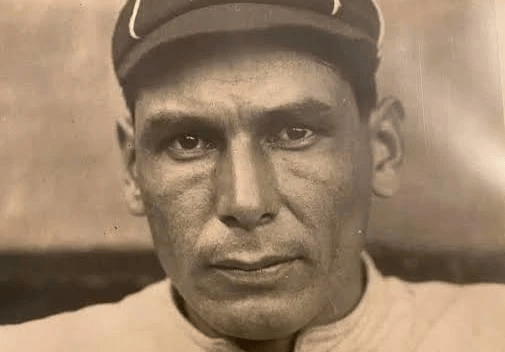
AI– Charles Albert “Chief” Bender (May 5, 1884 – May 22, 1954) was a Hall of Fame Major League Baseball pitcher and one of the most successful alumni of the Carlisle Indian Industrial School. A member of the Ojibwe (Chippewa) nation, Bender overcame intense racial animus to become the ace of Connie Mack’s Philadelphia Athletics dynasty, winning three World Series titles and inventing the modern “slider” pitch.
🎓 The Carlisle Connection
Bender entered the Carlisle Indian Industrial School in 1896 at age 12 and graduated in 1902.
- Athletic Launchpad: Under the school’s athletic framework, Bender excelled in multiple sports, playing baseball and starring as a halfback on the renowned Carlisle football team.
- The “Chief” Moniker: Like nearly every Native American ballplayer of his era, Bender was given the non-consensual nickname “Chief” by the public and press. While he frequently signed autographs as “Charley,” he used the nickname strategically to navigate a deeply segregated sports culture.
⚾ Baseball Career & Achievements
Bender went straight from amateur ball to the Majors, debuting with the Philadelphia Athletics in 1903 at age 19. He played 16 seasons in the big leagues, primarily with Philadelphia.
| Metric | Career Statistic |
| Win-Loss Record | 212–127 |
| Earned Run Average (ERA) | 2.46 |
| Strikeouts | 1,711 |
| World Series Titles | 3 (1910, 1911, 1913) |
- The Money Pitcher: Known for his unmatched poise under pressure, manager Connie Mack famously declared, “If I had one game to win… I’d inject Bender into it.” In 1911, he tied a major record by pitching three complete games in a single World Series.
- Inventor of the Slider: Historically, Bender is credited as one of the earliest pioneers—and likely the inventor—of the “nickel curve,” the breaking ball known today as the slider.
🦅 Facing Assimilation & Racism
Bender’s life was a complex balancing act between his Ojibwe identity and the white-dominated world he conquered.
- The “Ideal” Alumnus: Carlisle’s founder, Richard Henry Pratt, routinely pointed to Bender as the ultimate success story of his forced assimilation program. Bender was articulate, highly educated, dressed in high-end tailored suits, and was an expert trapshooter, painter, and golfer.
- Persistent Bigotry: Despite his status, Bender faced relentless racism. Fans taunted him with war whoops, and newspapers routinely used caricatures to describe him. He famously confronted taunting fans by shouting back, “Foreigners! Regular foreigners! Check your ancestry!”
🏛️ Legacy
In 1953, Bender became the first Native American pitcher elected to the National Baseball Hall of Fame. He died just a year later in 1954. Today, he is remembered not only as a legendary strategist on the mound but as an individual who fought to maintain his dignity within the oppressive systems of early 20th-century America.
Would you like to learn about other Carlisle athletes like Jim Thorpe, look into Bender’s World Series performances, or explore the history of the Ojibwe people in baseball?


Leave a Reply